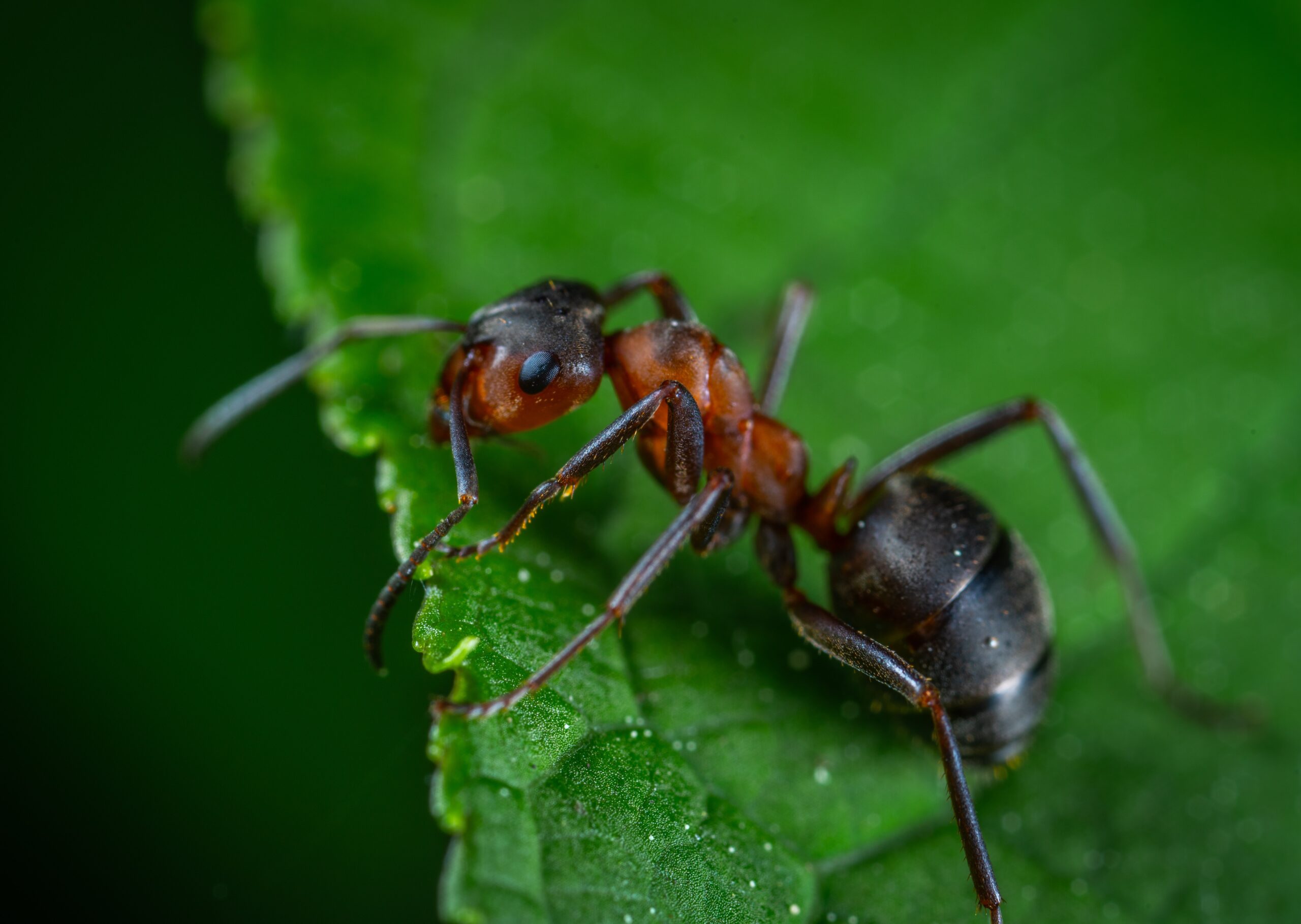
Ants returning after treatment is one of the most common concerns homeowners report in Pasadena, especially on properties with irrigated planting, mature canopy, and multiple landscape transitions leading back to the structure. In most cases, the issue is not simple treatment failure. It reflects how Argentine ants behave in Southern California landscapes and how they move through the layered exterior-to-interior transitions common in Pasadena homes.
Across Pasadena and nearby western San Gabriel Valley communities, recurring ant activity usually starts outside the home long before it becomes visible indoors. The pattern is especially consistent on lots where irrigation, foundation edges, fencing, retaining walls, and shaded planting beds create continuous travel lanes.
During inspections in Pasadena, we commonly find that the visible indoor trail is only the last stage of a much larger exterior movement pattern.
Understanding where reinfestation begins—and how colony networks reorganize after treatment—explains why activity often returns unless service placement matches those movement routes.
Where Ant Activity Usually Begins Around Pasadena Homes
In Pasadena, most recurring ant activity traces back to exterior nesting pressure rather than to a colony that originated inside the living area. The starting points are usually landscape zones that stay cooler, more humid, and more protected than exposed hardscape.
Common origin areas include curb strip root zones, irrigated lawn margins, ivy mats, citrus drip lines, decomposed granite borders, railroad ties, retaining-wall seams, planter boxes against foundations, fence-line soil corridors, and block-wall mortar gaps.
During inspections of Pasadena properties with continuous drip irrigation along walkways or planting beds, Argentine ant colonies are often established several yards away from the structure before trails ever reach siding, door thresholds, or window transitions.
These exterior nests act as reservoirs. Even when visible trails are reduced, surrounding colonies can continue to supply new movement back toward the house as treated surfaces break down or route around disturbance.
Why Argentine Ants Persist So Well in Pasadena Landscapes
Argentine ants are especially difficult to suppress in Pasadena because they do not behave like a single isolated nest. They function as a distributed colony network with multiple queens, multiple nesting pockets, and flexible trail systems that shift quickly when disturbed.
That means a homeowner may see one trail disappear while another forms along a different edge within days.
We commonly see colonies shift from curb strips to fence bases, from planter edges to retaining joints, or from shaded irrigation hardware to garage slab seams after an exterior route is disrupted.
Pasadena’s irrigated residential landscapes make this worse. Stable moisture allows colonies to stay active far longer than they would in drier, less managed environments. On properties with mature vegetation and regular watering, ants can keep expanding through the same yard even after the first visible pressure appears controlled.
How Ants Reach Structures After Treatment
Most reinfestation happens along existing movement infrastructure already built into the property. Argentine ants rarely cross wide, exposed areas if a shaded or protected linear route is available.
Common routes include walkway expansion joints, patio seams, edging transitions, irrigation tubing lines, fence rails, tree trunks contacting rooflines, gaps between fence members, downspout backsides, gutter lines, block-wall caps, curb edges, and utility paths leading toward the structure.
During inspections, these routes consistently explain why ant activity returns first at exterior-facing baseboards, garage thresholds, laundry wall penetrations, and window trim near irrigated planting.
In Pasadena neighborhoods with close lot lines and continuous fencing, ant movement often does not stop at one parcel. Colonies can travel along fence-connected corridors, shared vegetation lines, and shaded wall bases spanning multiple adjoining yards.
Where Activity Is Usually Detected First Indoors
Indoor sightings usually begin only after exterior trails reconnect with entry transitions. The first visible activity tends to occur where plumbing, trim, slab edges, or concealed voids allow ants to emerge close to moisture or food.
Common early detection points include kitchen sink plumbing penetrations, under-sink voids, countertop seams above dishwashers, pantry corners, trash areas, pet food storage, laundry penetrations, bathroom vanity lines, tub-adjacent baseboards, shower edges, window sill corners, and the garage-to-house door threshold.
In older homes built before 1950, raised foundations often allow ants to move laterally through subfloor support areas before they appear in finished rooms. That concealed movement is common in Pasadena’s older housing stock and often makes the infestation seem sudden even when exterior pressure has been developing for some time.
During inspections of older Pasadena homes with crawlspace access and perimeter planting, we often confirm that the interior sighting point is not the entry origin. The actual route usually starts outside and follows concealed transitions underneath or behind finished surfaces.
Why Ants Often Return 2 to 6 Weeks After Treatment
One of the most misunderstood parts of ant control is timing. Homeowners often assume that if ants return in a few weeks, the treatment failed. In reality, most exterior materials do not hold evenly across all surfaces under real Pasadena conditions.
Sun exposure, reflected heat from stucco and concrete, sprinkler overspray, hose runoff, porous masonry, and dust accumulation all reduce how long treated surfaces remain uniformly effective.
Barrier weakening usually starts gradually. Small untreated corridors reopen first, then ants resume movement along the easiest protected routes back toward moisture and food.
We commonly see recovery begin along irrigation lines, edging transitions, fence bases, railroad ties, yard nests, and shaded planter edges before activity becomes visible again at doors, windows, or baseboards.
In Pasadena and adjacent foothill neighborhoods, this pattern is especially common on south- and west-facing exposures where afternoon heat and reflected surface temperatures shorten residual reliability faster than homeowners expect.
Why Yard Nests Continue Re-Supplying Ant Pressure
Exterior colonies around Pasadena homes are rarely limited to one nest. More often, they are distributed across multiple nesting pockets connected by shaded travel infrastructure.
Common nesting zones include tree-root systems, mulch layers, retaining-wall voids, planter soil pockets, block-wall cavities, irrigation valve boxes, groundcover mats, and fence-line shade corridors.
During inspections on Pasadena properties with mature citrus, dense perimeter shrubs, or layered backyard planting, Argentine ant activity is usually coming from multiple overlapping nesting zones rather than a single centralized colony.
That is why visible trail reduction does not always mean the broader pressure has been eliminated. If nearby nesting pockets remain active, they can continue sending workers back toward the house as soon as coverage weakens.
The Role of Structural Surfaces in Trail Recovery
Ants do not move randomly on buildings. They follow edges where materials meet because those lines provide traction, protection, and navigational continuity.
Common return routes include stucco-to-trim transitions, window-frame seams, garage slab edges, fascia lines, door thresholds, siding joints, weep holes, and roofline contact points where branches or fencing reduce exposure.
During inspections, these material transitions are often more important than open wall surfaces. Ant trails commonly reestablish along shaded fascia or trim lines before they become noticeable along exposed foundation edges.
In older homes built before modern sealing standards, small finish gaps around penetrations and trim interfaces can remain accessible for years, especially after repainting, patching, utility work, or partial retrofit projects.
Why Irrigation Patterns Strongly Affect Recurrence
Moisture is one of the strongest predictors of how quickly ants return after service. Properties with frequent irrigation along the slab, foundation, or wall line usually experience faster reinfestation than drier lots with better separation between planting and structure.
Higher recurrence rates commonly show up near drip emitters installed along slab edges, overspray contacting siding, shaded north-facing beds, mulch-heavy borders, lawn-to-walkway transitions, and curb strip vegetation that stays active even during hotter months.
Argentine ants depend on stable humidity. In Pasadena landscapes, irrigation often replaces the seasonal moisture cycle they would otherwise depend on. That keeps nesting pressure active far longer across the year.
We commonly see faster recurrence on properties where irrigation design unintentionally supports a continuous damp corridor from the curb strip or side yard all the way to the house perimeter.
How Lighting Zones Can Support Recurring Activity
Exterior lighting can indirectly increase ant pressure by concentrating small insects that serve as food sources near the structure.
Common support zones include garage fixtures, entry sconces, utility lights, pathway lighting, fence-mounted fixtures, and illuminated side-yard transitions.
When ant trails reconnect near lighting zones, activity often spreads quickly toward nearby window seams, trim breaks, and siding transitions. This is especially noticeable on Pasadena homes where exterior lighting is mounted above irrigated planting or near shaded stucco returns.
When Returning Ants Suggest a Larger Exterior Colony Network
Some recurrence patterns point to a broader landscape issue rather than a narrow re-entry problem.
Examples include simultaneous activity in multiple rooms, trails appearing on opposite sides of the structure, reappearance after irrigation cycles, repeated sink-area entry despite prior treatment, or ants emerging from wall penetrations instead of floor edges.
During inspections of Pasadena properties bordered by shared fencing, dense side-yard planting, or continuous vegetation between neighboring lots, these patterns usually indicate an interconnected colony system extending beyond one part of the yard and sometimes beyond one parcel.
This is also why some homes in Pasadena and nearby communities like South Pasadena, San Marino, Sierra Madre, Monrovia, and older Arcadia neighborhoods show recurring pressure even when the immediate foundation line has been treated. The surrounding landscape structure may still be supplying active movement.
What Treatment Placement Improves Reliability
Effective Argentine ant control in Pasadena depends on treating movement infrastructure, not just the visible trail and not just the foundation edge.
Coverage often needs to include walkway seams, edging lines, fence posts and rails, retaining joints, tree-base travel routes, irrigation hardware clusters, downspout backsides, lighting fixture bases, block-wall voids, garage perimeter transitions, and other protected travel lanes linking the landscape to the structure.
During inspections, we commonly find that foundation-only placement leaves too many active approach routes intact, especially on lots with layered hardscape and perimeter vegetation.
When treatment is matched to how ants actually move across Pasadena properties, the reduction tends to hold more consistently between visits.
Realistic Service Expectations in Pasadena Properties
Service intervals vary widely depending on irrigation exposure, canopy density, vegetation continuity, shade, and how many exterior travel routes stay active through the year.
Unlike some structural pests that are easier to suppress with less route-sensitive placement, Argentine ants often require service frequency that reflects the property’s landscape pressure. On some lower-pressure Pasadena properties, ant control may hold with only occasional follow-up. On higher-pressure lots, especially where irrigation and dense planting remain continuous, more frequent service is often necessary.
Monthly service is usually the most reliable where curb strip vegetation is dense, citrus canopy surrounds the structure, irrigation contacts structure edges, or fence-connected travel routes exist on multiple sides.
Bimonthly service can work where planting density is moderate, irrigation exposure is limited, and shade coverage is less continuous.
Quarterly service may be adequate on some lower-pressure properties, but it is generally less reliable where exterior nesting zones remain active year-round.
Barrier weakening often begins between days 30 and 45, with noticeable coverage loss between day 45 and day 60 depending on surface type, sun exposure, and irrigation contact.
Why Ants Keep Coming Back in Pasadena Homes
Ants return to Pasadena homes because the visible indoor activity is usually connected to a much larger exterior system. Argentine ants move through irrigated edges, fence corridors, retaining transitions, tree-root zones, lighting areas, and structural seams long before homeowners notice them inside.
In Pasadena, that pattern is reinforced by the way local lots are built and landscaped: mature planting, close parcel transitions, older construction details, and frequent irrigation all create ideal movement conditions.
During inspections, the properties with the most stubborn recurrence are usually the ones where exterior colony pressure, concealed access routes, and landscape-supported travel corridors are all operating at the same time.
That is why control improves when service is built around movement pathways and nesting pressure—not just where ants happened to be seen on the day of treatment.
If you want, I can next give you a tracked-change style breakdown of exact sentence-level geo edits so you can compare old vs. new faster.
