In Southern California, routine pest-control treatments typically remain effective 30–60 days, but that range depends heavily on:
- coverage depth
- chemistry selection
- irrigation patterns
- shade density
- sun intensity on treated areas
- treatment surface type
- technician placement strategy across structure and landscape
In Pasadena and nearby western San Gabriel Valley neighborhoods with mature canopy, layered fencing, irrigated planting beds, and large hardscape transitions, treatment longevity is controlled less by the product alone and more by whether treatments reach the surfaces pests actually use as travel corridors and staging zones.
During inspections of Pasadena and western San Gabriel Valley homes, reduced treatment longevity is rarely caused by product failure alone. It more often reflects untreated exterior staging zones reconnecting with siding transitions, slab seams, fence corridors, or shaded planting edges surrounding the structure.
Why Treatment Coverage Matters More Than Product Alone
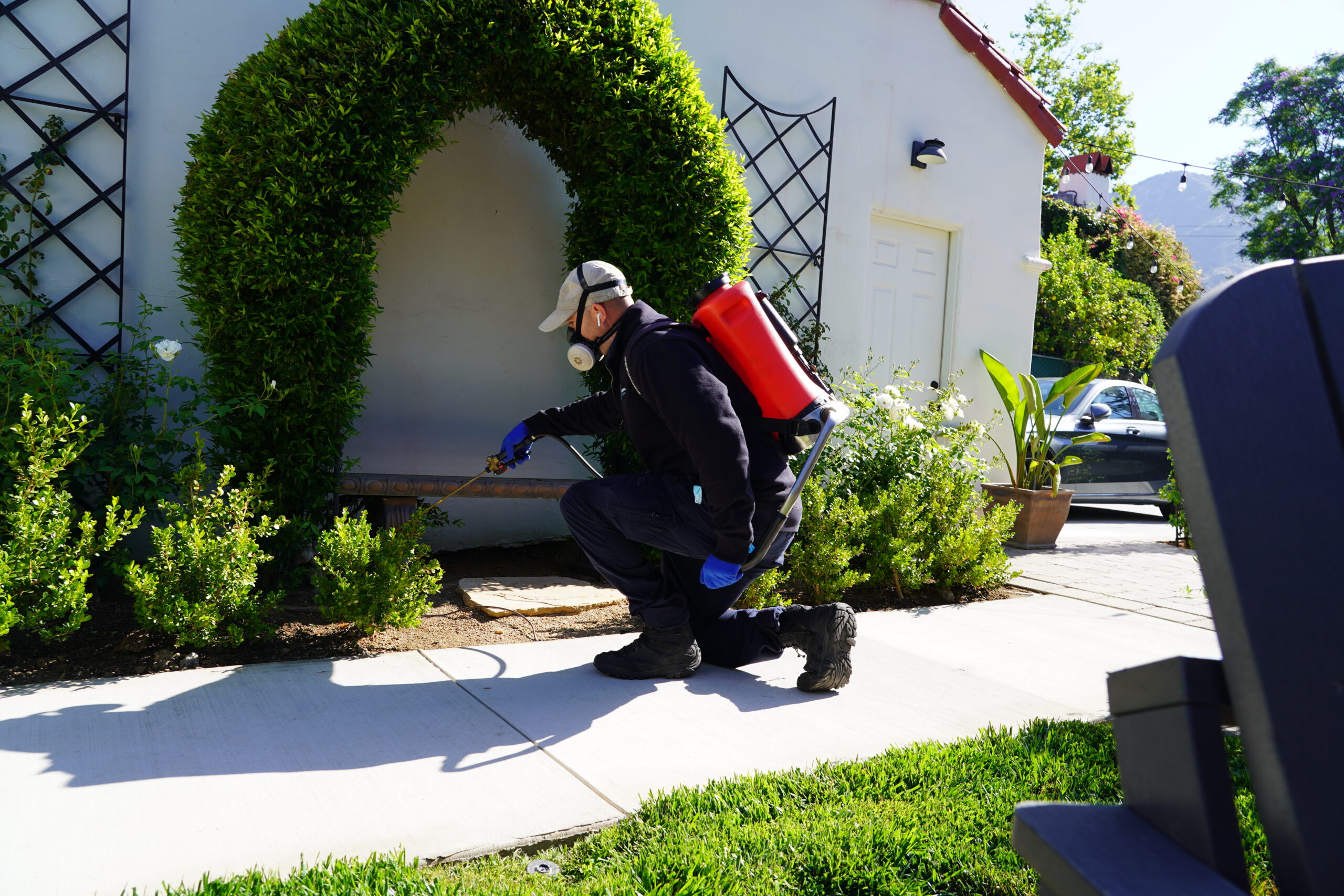
Many homes across Pasadena and adjacent western San Gabriel Valley neighborhoods receive narrow “perimeter-only” applications at the foundation edge. That approach rarely matches how pests move through Southern California properties.
Common bypass and re-establishment routes include:
- yard nests pushing activity back toward the structure
- walkway edges
- concrete expansion joints
- edging transitions
- railroad ties
- trees and low canopy contact points
- gaps between fence beams
- behind downspouts
- along gutters and fascia
- light and power lines leading toward the structure
- curb strip edges
- garage thresholds
- window and door transitions
When these routes are untreated, insects often continue moving around the property without ever relying on the narrow band at the base of the structure.
We commonly see activity persist along fence-connected side yards and shaded planting transitions even after foundation-edge treatments appear intact.
What Thorough Exterior Treatments Typically Include
A complete Southern California maintenance treatment usually extends beyond the slab edge to cover the property’s full movement envelope.
Effective coverage often includes:
Structure surfaces
- siding transitions
- door thresholds and jamb edges
- window perimeters
- trim seams
- stucco expansion joints
- utility penetrations
- eave return edges
- garage-door seams
- weep holes
- fascia transitions
- downspout attachment zones
- open-top block cores along foundations
Lighting zones
Structural and walkway lights are some of the most consistent insect congregation points on a property. Treatments often include:
- entry sconces
- garage lights
- pathway fixtures
- low-voltage landscape lighting housings
- mounting plates where fixtures meet stucco or siding
These areas attract flying insects, which then support spider activity and web buildup.
Fence systems
Fence lines act as continuous travel corridors between neighboring yards and structures.
Coverage commonly extends to:
- vertical fence posts
- lateral fence beams
- gaps between fence beams
- surface-depth transitions on solid fences and walls
- cinderblock wall mortar gaps
- open-top block cavities
Across Pasadena and western San Gabriel Valley neighborhoods with continuous fencing between parcels, these corridors frequently allow insects to move laterally across multiple properties without crossing exposed soil.
Ground-level staging areas
Harborage zones beneath objects are among the most overlooked treatment locations.
These include:
- undersides of patio tables
- undersides of chairs
- table frames
- chair legs and contact points
- storage bins
- grill bases
- planters
- landscape edging transitions
- railroad ties
- soil-to-hardscape borders
Trash can areas
More commonly missed trash-can treatment points include:
- wheels
- handles
- scoops
- undersides
- lid rims
These protected surfaces frequently hold ant trails, spider web anchoring, and resting insects.
Groundcover harborage zones
Dense groundcover creates protected humidity layers that insects use as staging areas before moving outward.
Treatments often extend beneath:
- ivy mats
- lantana clusters
- rosemary hedges
- low citrus canopy zones
- decorative bark beds bordering foundations
Why Landscape Conditions Control Treatment Longevity
Southern California pest pressure is continuous because irrigation and managed landscapes replace the seasonal shutdown seen in colder climates.
Properties with the following features—common across Pasadena and foothill-adjacent western San Gabriel Valley neighborhoods—typically experience faster barrier breakdown:
- mature citrus drop zones
- palm skirt accumulations
- dense ivy groundcover
- drip irrigation along slab edges
- shaded north-facing planting beds
- block-wall corridors connecting neighboring vegetation
- dense curb strip growth
- trees overhanging fences and structures
Pest pressure often re-forms first from yard nesting zones, tree-based travel routes, edging lines, and irrigated walkway borders before it becomes obvious on the home itself.
During inspections, these reinfestation corridors are often active several yards away from the structure before activity becomes visible along siding or thresholds.
The Role of Sun, Heat, and Water Exposure
Sun intensity on treated areas across Pasadena properties has a major effect on how long treatments remain reliable.
Even when a product has a longer residual on the label, actual field performance changes based on:
- direct afternoon sun
- reflected heat off stucco, concrete, and block walls
- irrigation overspray
- hose runoff
- repeated washdown at walkways and patios
While some products are labeled for up to 90 days, intense heat, direct sun, and water exposure often attenuate real-world longevity well before that point.
South- and west-facing walls on Pasadena homes, exposed fence lines, and unshaded walkway borders usually break down faster than shaded siding transitions, protected eaves, and sheltered block-wall seams.
How Treatment Surface Type Affects Longevity
The surface being treated is one of the most overlooked variables affecting how long pest control lasts.
Different Pasadena-area building materials—and similar construction found throughout the western San Gabriel Valley—absorb, reflect, or degrade treatments at very different rates.
Porous materials typically shorten residual performance:
- unfinished stucco
- cinderblock
- mortar joints
- decomposed granite edging
- railroad ties
- exposed wood fencing
These surfaces absorb active ingredients instead of holding them near the surface where insects travel.
Non-porous or sealed materials usually maintain longer residual effectiveness:
- painted trim
- sealed concrete
- metal door thresholds
- vinyl window frames
- coated siding panels
- sealed block walls
We commonly see treatments persist longer along painted fascia boards and sealed siding transitions than along adjacent raw stucco or open mortar seams on the same structure.
Surface temperature also matters. Dark-painted trim, south-facing block walls, and exposed fence boards often heat enough during summer afternoons to reduce residual life compared with shaded north-facing surfaces only a few feet away.
In older homes built before 1960, mixed-material transitions—such as stucco meeting wood trim or block meeting soil edging—create alternating porous and reflective surfaces that require different chemistry placement strategies to maintain consistent protection intervals.
Why Underside and Protected Surfaces Are Frequently Missed
Many insects avoid exposed, sunlit surfaces during the day and instead stage on protected undersides and recesses.
Common hidden activity points include:
- underside edges of patio furniture
- bottom rails of fencing
- retaining-wall caps
- planter lips
- trash can undersides and rims
- irrigation valve-box interiors
- behind downspouts
- beneath dense groundcover
During inspections of Pasadena and nearby western San Gabriel Valley homes, these protected surfaces frequently support early spider anchoring and ant trail development before activity becomes visible along siding or foundation seams.
How Chemistry Selection Affects Treatment Longevity
The choice of chemistry is just as important as coverage depth.
Effective treatment depends on selecting materials based on:
- target pest behavior
- nesting pattern
- treated surface type
- UV exposure
- water exposure
- sun intensity
- temperature buildup on walls and hardscape
- whether the area is porous, sealed, shaded, or heat-reflective
The right chemistry for Argentine ants moving through irrigated edging is not always the same chemistry best suited for spiders anchoring along eaves and lighting, or insects resting in shaded block-wall voids.
Knowledgeable technicians adjust product selection and placement to both the pest and the property conditions rather than applying the same material the same way across every surface.
Realistic Service Interval Expectations in Southern California
Treatment intervals reflect how quickly pests re-enter from surrounding vegetation, neighboring properties, and untreated harborage areas.
Monthly service
Best for:
- homes surrounded entirely or mostly by slab or hardscape
- heavy vegetation
- heavy irrigation
- dense shade canopy
- recurring spider webbing
- strong pest pressure
- properties with multiple fences, walls, and detached structures
Monthly service provides the most consistent suppression on properties where vegetation, irrigation continuity, and fence-connected travel routes remain active throughout the year.
Every two months (bimonthly)
Barrier degradation typically begins between days 30–45 across many Pasadena and nearby western San Gabriel Valley properties, with noticeable weakening at some homes by day 45 and others by day 60.
Quarterly service
Quarterly works for some properties but is less reliable for:
- heavily vegetated properties
- heavily watered properties
- heavily shaded properties
- dense fence-connected lots
- mature landscapes with multiple reinfestation corridors
When Short Treatment Longevity Indicates Coverage Gaps
If activity returns quickly after service, the issue is often untreated movement corridors and protected staging zones rather than unusually high pest pressure.
Frequently missed areas include:
- lateral fence beams
- vertical fence posts
- cinderblock mortar joints
- open-top block cavities
- weep holes
- fixture mounting plates
- trash can wheels, handles, scoops, undersides, and rims
- underside furniture edges
- groundcover bases
- behind downspouts
- along fascia and gutter lines
- light and power line attachment routes
Addressing these secondary and tertiary pathways usually improves results more than increasing volume at the foundation perimeter.
In Southern California homes, pest-control longevity depends on whether treatments are placed where pests actually travel across the specific surfaces present on the property, especially porous stucco, block-wall seams, shaded siding transitions, fence systems, irrigated edging zones, and protected underside harborage areas common throughout Pasadena neighborhoods and nearby western San Gabriel Valley communities with similar construction patterns.
